
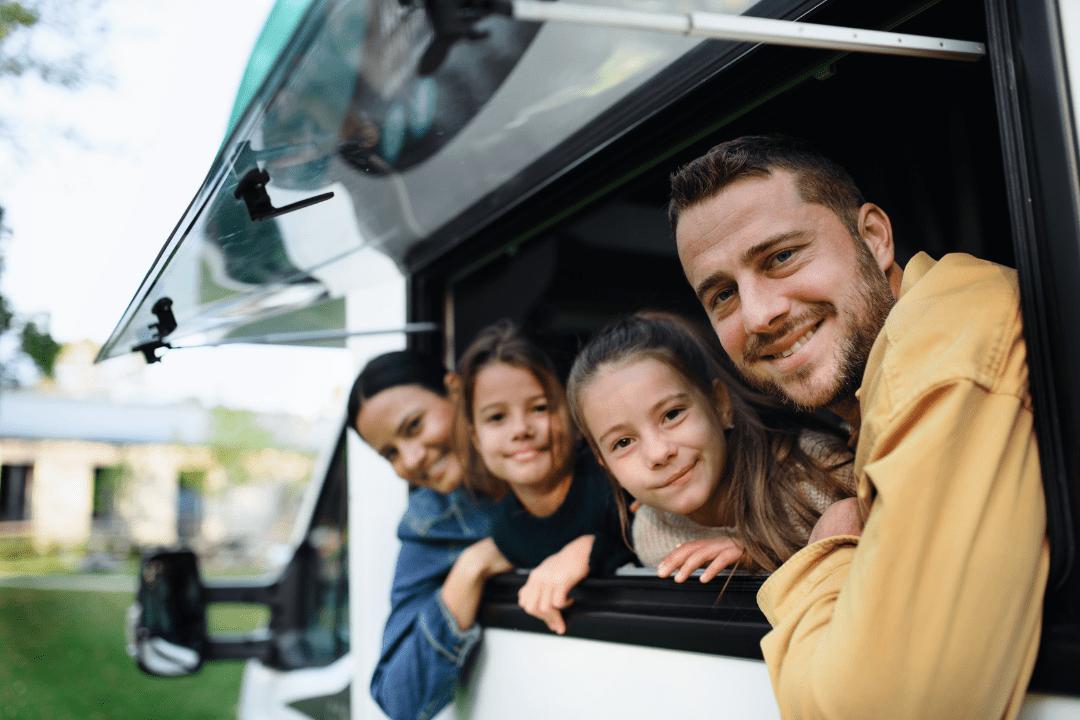
Can Families Live Full-Time in an RV?
At Park on Whiskey Road, we welcome families of all shapes and sizes every year, and one thing we hear often is quiet curiosity. Parents watch kids ride bikes around the park on a school day and wonder how that lifestyle actually works. The idea of trading a traditional house for wheels feels bold, exciting, and sometimes unrealistic. From our perspective as an RV park that hosts extended stays, we’ve seen that family RV living is not only possible, but deeply rewarding when expectations are grounded in reality and families choose the right environment to call home.
Why Families Are Choosing Life on the Road
Families don’t usually wake up one morning and impulsively decide to live in an RV. For most, the decision comes after careful thought about time, flexibility, and togetherness. Parents tell us they want more shared experiences and fewer rushed evenings. RV life offers the chance to slow down, explore new places, and stay connected as a unit. According to the RV Industry Association, younger families are one of the fastest-growing segments in the RV community, which shows this lifestyle shift is more than a passing trend and reflects changing priorities around work, education, and family time.
Daily Routines Still Matter
One common misconception is that life in an RV is chaotic or lacks structure. In reality, families who thrive on the road are the ones who build routines that fit their space. Mornings still include breakfast, schoolwork, and work responsibilities. Evenings involve dinner, downtime, and bedtime rituals. At Park on Whiskey Road, families often settle into a rhythm that feels surprisingly normal, just with a different backdrop. That consistency is a key reason family RV living works long term, especially for kids who benefit from predictability even in a flexible lifestyle.
Education Looks Different, Not Lesser
Schooling is one of the first concerns parents raise. While education may not happen in a traditional classroom, learning doesn’t stop. Many families use homeschooling or virtual programs and supplement lessons with real-world experiences. History comes alive at landmarks, science unfolds in nature, and reading happens everywhere. The National Park Service highlights how experiential learning deepens understanding, and families on the road often see that firsthand. Education becomes integrated into daily life, rather than confined to a single building.
Socialization Happens in New Ways
Another worry we hear is whether kids miss out socially. What we observe is the opposite. Campgrounds naturally encourage interaction. Kids meet others from different states, backgrounds, and ages, often forming quick friendships on playgrounds or during shared activities. Long-term stays help those connections grow deeper. While friendships may look different than those formed in a single neighborhood, they are no less meaningful. For many parents, family RV living opens doors to social experiences their kids might never encounter otherwise.
It’s Not a Permanent Vacation
Life on the road isn’t an endless holiday, and families who succeed understand that early on. Work deadlines still exist, school assignments still need attention, and chores don’t disappear. The difference is in balance. Travel days are planned thoughtfully, rest days are prioritized, and downtime is protected. Families who approach RV life with realistic expectations avoid burnout and enjoy the lifestyle far more. From what we’ve seen, acknowledging that this is real life, just lived differently, makes all the difference.
The Importance of the Right RV Park
Even the best intentions can fall apart without the right place to stay. Reliable utilities, safe spaces for kids to play, and a welcoming atmosphere all contribute to stability. At Park on Whiskey Road, we focus on creating an environment where families feel comfortable settling in, not just passing through. Access to full hookups, quiet areas, and a sense of community helps families maintain routines and feel grounded. Choosing a supportive RV park is often what turns a short experiment into a sustainable lifestyle.
Managing Space and Expectations
Living in a smaller space requires adjustment, especially with children. Families quickly learn the value of organization, shared responsibility, and communication. Kids often become more involved in daily tasks, which builds independence and confidence. While space is limited, experiences are not. Many parents tell us their children adapt faster than expected and appreciate the closeness that comes from sharing life more intentionally. This mindset shift is central to successful family RV living and helps everyone focus on what truly matters.
Community Makes It Sustainable
One of the most overlooked benefits of long-term RV stays is community. Families staying for weeks or months naturally connect with neighbors, creating a support system that feels familiar. Kids look forward to seeing friends each day, and parents appreciate having others who understand the lifestyle. According to the American Academy of Pediatrics, strong social connections play a major role in child well-being, and RV parks that foster community help meet that need in a meaningful way.
Is This Lifestyle Right for Your Family?
There’s no one-size-fits-all answer, and that’s okay. Family RV living isn’t about escaping responsibility or chasing constant adventure. It’s about redefining home, prioritizing time together, and choosing experiences over excess. From our point of view at Park on Whiskey Road, the families who thrive are the ones who plan carefully, stay flexible, and choose a park that supports their daily lives. If you’ve ever wondered whether family RV living could work for you, consider visiting, staying awhile, and seeing firsthand how life on the road can feel grounded, enriching, and surprisingly normal when you choose the right place to call home and take the first step toward creating unforgettable family memories.
Author: Ric Favors